
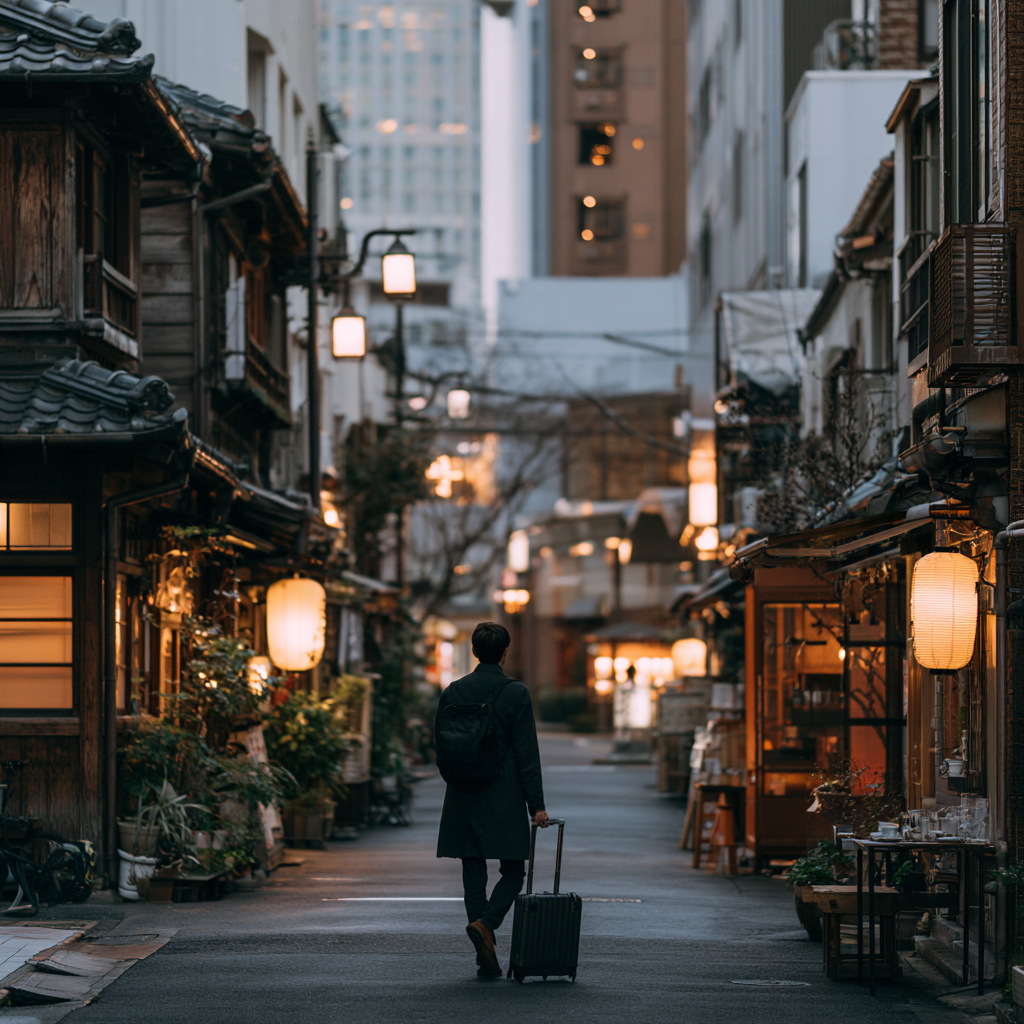
Choosing where to stay can make a big difference to your Japan trip.
Japan has an excellent public transportation network, but the country is large and each city has a very different atmosphere. Choosing a hotel based only on price can sometimes mean spending much more time traveling between your accommodation and the places you want to visit.
For a first trip to Japan, Tokyo, Kyoto, and Osaka are three of the most practical bases to consider. Tokyo offers modern city life, shopping, and an enormous variety of neighborhoods. Kyoto is ideal for temples, traditional streets, and Japanese culture. Osaka is known for food, nightlife, and convenient access to destinations around Kansai.
The best place to stay depends on your itinerary, budget, and the kind of Japan experience you want.
This guide explains where to stay in Japan and how to choose the right area for your trip.
- Where Should You Stay in Japan?
- Shinjuku: Best for First-Time Visitors and Nightlife
- Shibuya: Best for Modern Tokyo
- Tokyo Station and Ginza: Best for Convenience
- Asakusa: Best for Traditional Tokyo
- Ueno: Best for Value and Culture
- Shinagawa: Best for Train Connections
- Kyoto Station: Best for Transportation
- Downtown Kyoto: Best All-Around Option
- Gion & Higashiyama: Best for Traditional Kyoto
- Namba: Best for Food and Nightlife
- Umeda / Osaka Station: Best for Transportation and Day Trips
- 1. Distance from a Station
- 2. Your Main Transportation Route
- 3. Your Evening Plans
- 4. Luggage
- 5. Your Budget
Where Should You Stay in Japan?
For many first-time visitors, a simple route looks like this:
Tokyo → Kyoto → Osaka
You don’t necessarily need to stay in all three cities. Your choice should depend on how long your trip is and what you want to see.
| City | Best For | Typical Experience |
|---|---|---|
| Tokyo | First-time visitors, shopping, modern Japan | Huge city, neighborhoods, food, nightlife |
| Kyoto | Traditional Japan and temples | Temples, gardens, historic streets |
| Osaka | Food, nightlife, day trips | Street food, lively evenings, shopping |
| Hakone | Hot springs and Mt. Fuji | Ryokan, onsen, nature |
| Hiroshima | History and additional destinations | Peace Memorial Park, Miyajima |
If you only have a few days, it is usually better to concentrate on one region rather than trying to see the entire country.
For a longer first trip, Tokyo, Kyoto, and Osaka make a convenient combination because they offer very different experiences and are connected by Japan’s extensive rail network. Kyoto Station, for example, is directly connected to the Tokaido Shinkansen network from Tokyo and the Haruka airport service from Kansai International Airport.
Where to Stay in Tokyo
Tokyo is enormous, and there is no single downtown area.
Different neighborhoods can feel completely different from one another, so choosing the right base is particularly important here.
For first-time visitors, popular choices include:
- Shinjuku
- Shibuya
- Tokyo Station / Ginza
- Asakusa
- Ueno
- Shinagawa
Recent 2026 accommodation guides also consistently highlight these areas because of their transportation connections and different styles of travel.
Shinjuku: Best for First-Time Visitors and Nightlife
Shinjuku is one of Tokyo’s most famous districts.
It is surrounded by restaurants, shopping, entertainment, department stores, and nightlife. Shinjuku Station is also one of the city’s major transportation hubs.
Why stay in Shinjuku?
- Excellent transportation
- Huge selection of restaurants
- Nightlife
- Shopping
- Easy access to other parts of Tokyo
- Plenty of accommodation options
Shinjuku can be busy and overwhelming, especially around the station.
If you prefer a quieter atmosphere, consider staying a few streets away from the busiest nightlife areas.
Best for: First-time visitors, nightlife, shopping, travelers who want a lively atmosphere
Shibuya: Best for Modern Tokyo
Shibuya is another popular choice for first-time visitors.
The area is famous for Shibuya Crossing, fashion, cafes, restaurants, shopping, and nightlife.
It is particularly attractive if you want to experience Tokyo’s modern and youthful side.
Why stay in Shibuya?
- Shopping and fashion
- Cafes and restaurants
- Nightlife
- Pop culture
- Excellent transportation
Shibuya can be crowded, so travelers looking for a peaceful hotel environment may prefer another area.
Best for: Younger travelers, couples, shopping, nightlife, modern Tokyo
Tokyo Station and Ginza: Best for Convenience
The Tokyo Station and Ginza area is one of the most practical places to stay if you plan to travel between cities.
Tokyo Station is a major transportation hub and an important departure point for Shinkansen services.
Ginza is known for department stores, restaurants, shopping, and an upscale atmosphere.
Why stay here?
- Excellent train connections
- Convenient for Shinkansen travel
- High-quality restaurants and shopping
- Easy access to central Tokyo
- Good choice for travelers with luggage
The area is generally calmer at night than Shinjuku or Shibuya.
Best for: First-time visitors, couples, families, Shinkansen travel, travelers who value convenience
Asakusa: Best for Traditional Tokyo
If you want a different side of Tokyo, consider Asakusa.
The area around Senso-ji Temple has a more traditional atmosphere, with historic streets, temples, shops, and traditional food.
It is also often considered when travelers want more affordable accommodation than some of Tokyo’s most central upscale districts. Current 2026 guides continue to highlight Asakusa as a value-oriented option.
Why stay in Asakusa?
- Traditional atmosphere
- Senso-ji Temple
- Good food
- More relaxed evenings
- Often better accommodation value
The main trade-off is that some major attractions in western Tokyo require a longer train ride.
Best for: Traditional Japan, couples, budget-conscious travelers, photographers
Ueno: Best for Value and Culture
Ueno is another practical choice, particularly for travelers who want easy transportation without staying in the busiest parts of Tokyo.
The area has Ueno Park, museums, markets, restaurants, and convenient rail connections.
It can also be a useful base for travelers arriving from Narita Airport or continuing north by train.
Best for: Budget-conscious travelers, museums, families, convenient transportation
Shinagawa: Best for Train Connections
Shinagawa is worth considering if transportation is your priority.
It is a major railway hub and can be convenient for travelers using the Shinkansen or traveling to and from Haneda Airport.
The neighborhood is less tourist-focused than Shinjuku or Shibuya.
Best for: Business travelers, Shinkansen users, airport convenience, short stays
Where to Stay in Kyoto
Kyoto is very different from Tokyo.
Instead of focusing mainly on nightlife and huge transportation hubs, many visitors choose Kyoto because of its temples, gardens, traditional architecture, and historic neighborhoods.
Three areas are particularly useful to consider:
- Kyoto Station
- Downtown Kyoto
- Gion & Higashiyama
Kyoto Station: Best for Transportation
Kyoto Station is one of the most convenient places to stay if you are traveling with luggage or planning day trips.
The station connects to the Shinkansen, JR trains, subway, and the Haruka Express to Kansai International Airport.
Why stay near Kyoto Station?
- Easy arrival with luggage
- Shinkansen access
- Convenient for Osaka and Nara day trips
- Airport access
- Large selection of hotels
The downside is that the area does not have the same traditional atmosphere as Gion or Higashiyama.
Best for: First-time visitors, day trips, transportation convenience, travelers with luggage
Downtown Kyoto: Best All-Around Option
The downtown area around Kawaramachi and Karasuma offers a convenient balance between sightseeing, restaurants, shopping, and transportation.
It is a good choice if you want to explore Kyoto during the day but also have plenty of restaurants and places to walk around in the evening.
Best for: First-time visitors, couples, restaurants, shopping, balanced itineraries
Gion & Higashiyama: Best for Traditional Kyoto
If your main reason for visiting Kyoto is to experience traditional Japan, Gion and Higashiyama are excellent areas to consider.
Higashiyama contains historic streets, temples, traditional architecture, and several important cultural attractions. JNTO describes the area as one of the central places to experience Kyoto’s traditional townscape.
Why stay here?
- Traditional streets
- Temples and shrines
- Historic atmosphere
- Beautiful morning and evening walks
- Easy access to famous cultural sites
The downside is that accommodation can be more expensive, and some streets become very crowded during peak sightseeing hours.
Best for: Traditional Japan, couples, photography, culture-focused trips
Where to Stay in Osaka
Osaka is often a particularly good choice for travelers who enjoy food, nightlife, and day trips.
The two major areas to understand are:
- Namba / Minami
- Umeda / Osaka Station
They are both central, but they offer different experiences.
Namba: Best for Food and Nightlife
Namba is one of Osaka’s most popular areas for visitors.
Dotonbori, Shinsaibashi, and many restaurants and entertainment areas are nearby.
Why stay in Namba?
- Excellent food
- Nightlife
- Shopping
- Dotonbori
- Easy evening exploration
- Convenient access to parts of Kansai
It is particularly attractive if you want to walk out of your hotel and immediately have restaurants and entertainment nearby.
Best for: First-time visitors, food lovers, nightlife, couples
Umeda / Osaka Station: Best for Transportation and Day Trips
Umeda, centered around Osaka Station, is a strong option if you plan to use Osaka as a base for exploring the Kansai region.
It offers extensive train connections and easy access toward Kyoto, Kobe, and other destinations.
Current 2026 guides commonly distinguish Umeda as the more transportation-oriented base and Namba as the more nightlife- and food-oriented option.
Why stay here?
- Excellent transportation
- Convenient for day trips
- Large shopping complexes
- Many restaurants
- Good choice for business travelers
Best for: Day trips, transportation, shopping, longer Osaka stays
Tokyo vs Kyoto vs Osaka: Which City Should You Choose?
Instead of asking which city is “best,” think about what you want from your trip.
| If you want… | Consider staying in… |
|---|---|
| Modern Japan | Tokyo |
| Traditional Japan | Kyoto |
| Food and nightlife | Osaka |
| Shopping | Tokyo |
| Temples and gardens | Kyoto |
| Kansai day trips | Osaka |
| First-time Japan experience | Tokyo + Kyoto + Osaka |
| Hot springs | Hakone or another onsen town |
For many first-time travelers, combining Tokyo, Kyoto, and Osaka provides a good introduction to several different sides of Japan.
How Many Nights Should You Stay in Each City?
There is no universal answer, but your trip length can help determine how many bases make sense.
5–7 days
Trying to visit too many cities can make the trip feel rushed.
A simple option is:
Tokyo: 4–5 nights
Then take day trips if desired.
Alternatively, focus on Kyoto and Osaka if traditional Japan and Kansai are your main interests.
8–10 days
You have more flexibility.
A common structure is:
Tokyo: 4 nights
Kyoto: 3 nights
Osaka: 2 nights
11–14 days
You can slow down and add another destination.
For example:
Tokyo → Hakone → Kyoto → Osaka
Or:
Tokyo → Kyoto → Osaka → Hiroshima
The important thing is not to change hotels every night.
How to Choose the Right Hotel Area
Once you have decided on a city, don’t choose a hotel based only on the lowest price.
Consider these five things.
1. Distance from a Station
A hotel that is a five-minute walk from a useful station can save a surprising amount of time over a week-long trip.
Check the actual walking distance rather than relying only on the hotel’s stated “station access.”
2. Your Main Transportation Route
Think about where you will go every day.
For example:
- Shinkansen → Tokyo Station or Shinagawa
- Kyoto day trips → Kyoto Station or central Kyoto
- Osaka nightlife → Namba
- Kansai day trips → Umeda
The most convenient neighborhood depends on your itinerary.
3. Your Evening Plans
This is easy to overlook.
If you enjoy going out for dinner and drinks, staying near restaurants and nightlife can be much more convenient.
If you prefer quiet evenings, a busy nightlife district may not be the best choice.
4. Luggage
If you are traveling with large suitcases, consider how easy it will be to reach your hotel.
A hotel close to a major station can be worth paying slightly more for, especially at the beginning and end of your trip.
5. Your Budget
The cheapest hotel is not always the cheapest option overall.
If you save ¥3,000 per night but spend extra money on transportation every day, the difference may disappear quickly.
This is particularly important when comparing hotels far from the city center.
For a broader look at accommodation and other Japan travel expenses, see our guide:
How Much Does a Trip to Japan Cost? A Complete 2026 Budget Guide
Hotel, Hostel, Apartment or Ryokan?
Japan offers more than traditional hotels.
Hotel
The easiest option for most first-time visitors.
Good for couples, families, and travelers who want simple check-in and predictable facilities.
Hostel
A good option for solo travelers and those looking to reduce accommodation costs.
Some hostels also offer private rooms.
Apartment or Vacation Rental
Can be useful for longer stays or travelers who want more space.
However, availability, rules, and local regulations vary, so check the property’s conditions carefully before booking.
Ryokan
A traditional Japanese inn.
Ryokan stays can include tatami rooms, futon bedding, Japanese meals, and access to hot springs depending on the property.
For many visitors, staying one night at a ryokan can be a memorable part of a Japan trip.
When Should You Book Accommodation in Japan?
Popular periods can become busy.
This is particularly true around:
- Cherry blossom season
- Golden Week
- Summer holidays
- Obon
- Autumn foliage season
- New Year
If your travel dates are fixed during a popular period, booking earlier gives you more choice.
For less busy periods, you may have more flexibility.
Your accommodation budget should also be considered alongside your overall trip budget and travel season.
Where Should You Stay on Your First Trip to Japan?
If you are overwhelmed by all the choices, keep it simple.
Tokyo
Choose Shinjuku if you want nightlife and easy access to many parts of the city.
Choose Shibuya if you want modern Tokyo, shopping, cafes, and nightlife.
Choose Tokyo Station/Ginza if transportation and comfort are your priorities.
Choose Asakusa if you want traditional atmosphere and potentially better accommodation value.
Kyoto
Choose Kyoto Station for transportation and day trips.
Choose Downtown Kyoto for a balance of restaurants, shopping, and sightseeing.
Choose Gion/Higashiyama for traditional scenery and cultural atmosphere.
Osaka
Choose Namba for food, nightlife, and entertainment.
Choose Umeda for transportation and regional day trips.
Final Thoughts
There is no single best place to stay in Japan.
The right choice depends on where you want to go, how you want to spend your evenings, and how much convenience you value.
For many first-time visitors, Tokyo, Kyoto, and Osaka provide a strong starting point.
Within each city, choosing the right neighborhood can make your trip easier:
Tokyo: Shinjuku, Shibuya, Tokyo Station/Ginza, or Asakusa
Kyoto: Kyoto Station, Downtown Kyoto, or Gion/Higashiyama
Osaka: Namba or Umeda
Once you know your itinerary, choose a hotel that keeps your daily transportation simple rather than simply choosing the cheapest room.
And if you’re still planning your first trip to Japan, continue with our guides:
コメント