
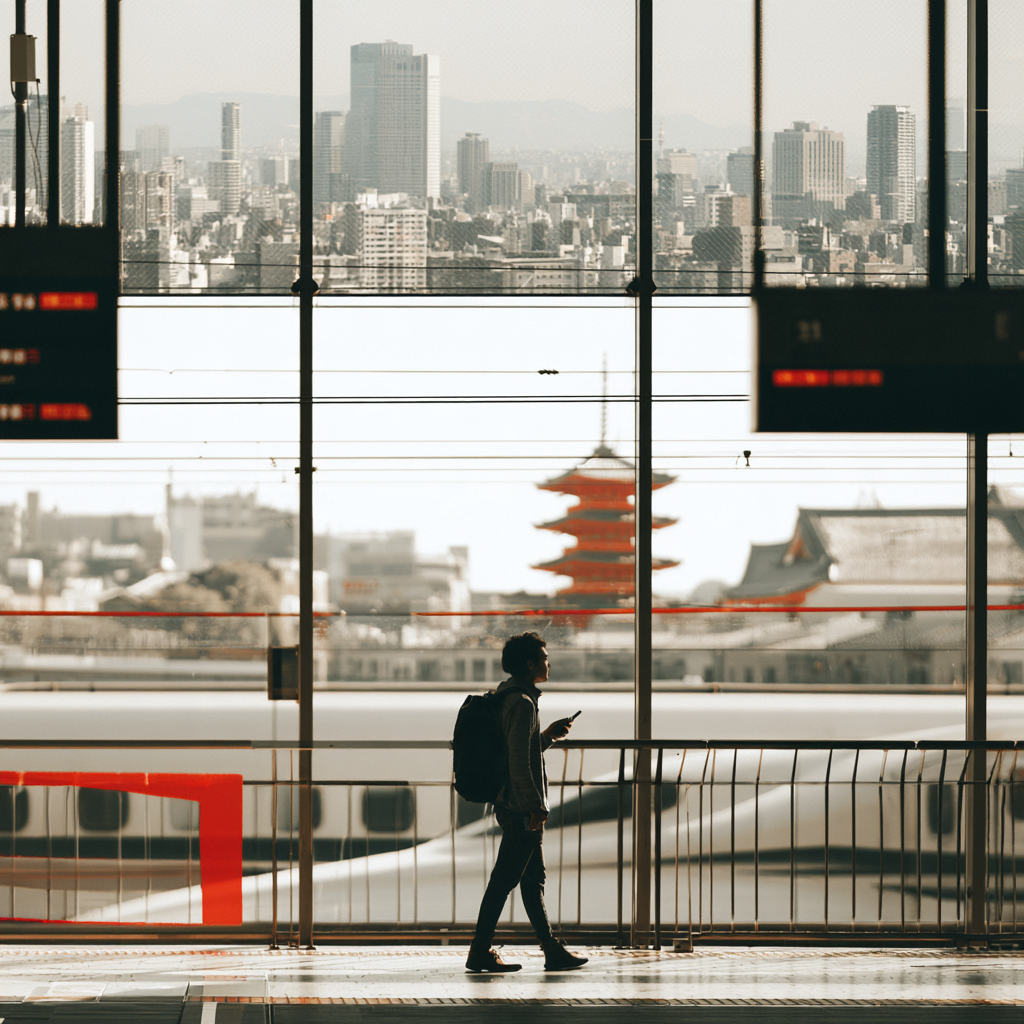
Planning your first trip to Japan can be exciting — but also a little overwhelming.
Japan has countless places to visit, from the neon streets of Tokyo to the historic temples of Kyoto and the food-filled streets of Osaka. If you only have one week, the biggest challenge is deciding what to see without spending your entire trip on trains.
This 7-day Japan itinerary is designed for first-time visitors who want to experience some of Japan’s highlights at a comfortable pace.
The route follows a simple path:
Tokyo → Kyoto → Osaka
This avoids unnecessary backtracking and gives you a good mix of modern Japan, traditional culture, food, shopping, and sightseeing.
Quick tip: If possible, consider flying into Tokyo and flying home from Osaka’s Kansai International Airport (KIX). This can save you from returning to Tokyo at the end of your trip.
- Your 7-Day Japan Itinerary at a Glance
- Day 1: Arrive in Tokyo
- Day 2: Modern Tokyo — Harajuku, Shibuya & Shinjuku
- Day 3: Explore More of Tokyo or Take a Day Trip
- Day 4: Tokyo to Kyoto by Shinkansen
- Day 5: Discover Traditional Kyoto
- Day 6: Kyoto to Osaka
- Day 7: Enjoy Osaka Before Departure
- Don’t try to see everything
- Start popular attractions early
- Group attractions by area
- Leave some free time
- Don’t underestimate travel time
Your 7-Day Japan Itinerary at a Glance
| Day | Location | Main Highlights |
|---|---|---|
| Day 1 | Tokyo | Asakusa, Senso-ji, Tokyo evening |
| Day 2 | Tokyo | Meiji Shrine, Harajuku, Shibuya, Shinjuku |
| Day 3 | Tokyo | Tokyo sightseeing or optional day trip |
| Day 4 | Kyoto | Shinkansen, Fushimi Inari, Gion |
| Day 5 | Kyoto | Kiyomizu-dera, Arashiyama, traditional Kyoto |
| Day 6 | Osaka | Osaka Castle, Namba, Dotonbori |
| Day 7 | Osaka | Food, shopping, and departure |
This schedule is intentionally flexible. You do not need to visit every attraction listed below.
Choose a few places that interest you most and leave some time to simply walk around and discover Japan.
Day 1: Arrive in Tokyo
Your first day in Japan should be relatively relaxed.
Depending on your arrival time and jet lag, you may not have enough energy for a full day of sightseeing. Instead of trying to visit several major attractions, spend your first day exploring one area.
Recommended area: Asakusa
Asakusa is a great introduction to Tokyo because it combines traditional Japanese scenery with the energy of a major city.
Visit Senso-ji Temple, one of Tokyo’s best-known temples, and walk through Nakamise-dori, the shopping street leading toward the temple.
After exploring the area, take a walk along the Sumida River or head toward Tokyo Skytree if you still have time.
Evening
For your first night, keep things simple.
Try a casual Japanese restaurant, ramen shop, sushi restaurant, or izakaya.
You do not need to make your first night complicated. Getting some rest will make the next few days much more enjoyable.
Suggested schedule:
- Arrive in Tokyo
- Check into your hotel
- Explore Asakusa
- Visit Senso-ji
- Dinner
- Return to your hotel and rest
Day 2: Modern Tokyo — Harajuku, Shibuya & Shinjuku
Day 2 is about experiencing the modern side of Tokyo.
Start your morning at Meiji Jingu, a large Shinto shrine surrounded by forest near Harajuku.
After visiting the shrine, walk toward Harajuku and explore the surrounding streets.
Harajuku
Harajuku is known for fashion, youth culture, cafes, and shopping.
You can explore Takeshita Street, but don’t feel that you need to spend your entire morning there.
From Harajuku, continue toward Shibuya.
Shibuya
Shibuya is one of the most recognizable areas of Tokyo.
You can visit:
- Shibuya Crossing
- Shibuya Scramble Square
- Hachiko Statue
- Center-gai
- Local shops and restaurants
Shibuya is particularly impressive in the evening when the surrounding buildings and signs light up.
Shinjuku
Finish your day in Shinjuku.
Explore the shopping areas around Shinjuku Station, visit a restaurant, or simply walk through the streets and experience Tokyo after dark.
If you enjoy nightlife, Shinjuku has countless restaurants, bars, and entertainment options.
Suggested schedule:
Morning: Meiji Jingu → Harajuku
Afternoon: Shibuya
Evening: Shinjuku
Day 3: Explore More of Tokyo or Take a Day Trip
You have several options for Day 3.
If this is your first time in Tokyo, staying in the city is perfectly reasonable. There is more than enough to see.
Option 1: Explore More of Tokyo
Depending on your interests, consider:
- Ueno
- Akihabara
- Ginza
- Tokyo Station
- Tsukiji Outer Market
- Odaiba
- teamLab
- Tokyo Disney Resort
For example, if you enjoy anime, games, and electronics, spend the day around Akihabara.
If you prefer shopping and food, Ginza and Tokyo Station are good options.
If you are interested in Japanese food, Tsukiji Outer Market can be an interesting stop.
Option 2: Take a Day Trip
You could also leave Tokyo for the day.
Popular choices include:
- Hakone
- Kamakura
- Nikko
- Kawaguchiko / Mount Fuji area
However, do not feel that you have to add a day trip.
One of the biggest mistakes first-time visitors make is trying to fit too many destinations into one week.
A relaxed day in Tokyo can be just as enjoyable as another long train journey.
Day 4: Tokyo to Kyoto by Shinkansen
Today you will travel from Tokyo to Kyoto.
The Tokaido Shinkansen connects Tokyo and Kyoto, and the fastest Nozomi services take roughly 2 hours and 15 minutes between Kyoto and Tokyo.
Try to leave Tokyo in the morning so that you still have most of the afternoon in Kyoto.
If the weather is clear, you may also have a chance to see Mount Fuji from the train on the way west.
After arriving in Kyoto
Check into your hotel and head toward Fushimi Inari Taisha.
Fushimi Inari is famous for its thousands of red torii gates stretching up the mountain.
It is one of Kyoto’s most recognizable sights.
Evening: Gion
After Fushimi Inari, head toward the Gion area.
Walk through the traditional streets around:
- Gion
- Hanamikoji
- Yasaka Shrine
Take your time and enjoy Kyoto’s atmosphere after sunset.
Remember that Gion is a residential and cultural area, so be respectful when photographing streets and people.
Suggested schedule:
Morning: Shinkansen from Tokyo to Kyoto
Afternoon: Fushimi Inari
Evening: Gion and dinner
Day 5: Discover Traditional Kyoto
Day 5 is your main Kyoto sightseeing day.
Start early if possible.
Popular Kyoto attractions can become very crowded later in the morning, especially during busy travel seasons.
Kiyomizu-dera
Begin at Kiyomizu-dera, one of Kyoto’s most famous temples.
From there, walk through the historic streets of Higashiyama.
You can explore:
- Sannenzaka
- Ninenzaka
- Yasaka Pagoda
- Yasaka Shrine
This area is ideal for walking and taking your time.
Arashiyama
In the afternoon, travel to Arashiyama.
The area is famous for its bamboo grove and beautiful surroundings.
You can also visit nearby temples and walk along the Katsura River.
However, you do not necessarily need to visit every attraction in Arashiyama.
If you are tired after several days of sightseeing, simply enjoy the area and have a relaxed afternoon.
Evening
Return to central Kyoto for dinner.
Kyoto has everything from inexpensive noodle restaurants to traditional Japanese cuisine and high-end dining.
Suggested schedule:
Morning: Kiyomizu-dera → Higashiyama
Afternoon: Arashiyama
Evening: Kyoto dinner and relaxing
Day 6: Kyoto to Osaka
On Day 6, head from Kyoto to Osaka.
The journey is relatively short compared with the Tokyo–Kyoto trip, so you can spend most of the day sightseeing.
If you are staying in Kyoto, you can check out in the morning, leave your luggage at your hotel or use a luggage service, and then continue to Osaka.
Osaka Castle
Start your Osaka sightseeing around Osaka Castle.
The castle and surrounding park are especially enjoyable if you want a break from the dense streets of Tokyo and Kyoto.
After exploring the area, head toward central Osaka.
Namba
Namba is one of the best areas to experience Osaka’s food and entertainment scene.
Walk around:
- Namba
- Dotonbori
- Shinsaibashi
- Kuromon Market
Dotonbori
End the day around Dotonbori.
This is one of Osaka’s most famous entertainment and food districts.
Try some Osaka specialties such as:
- Takoyaki
- Okonomiyaki
- Kushikatsu
You do not need a strict restaurant plan here.
Walking around and choosing a restaurant that looks interesting can be part of the experience.
Suggested schedule:
Morning: Kyoto → Osaka
Afternoon: Osaka Castle
Evening: Namba → Dotonbori
Day 7: Enjoy Osaka Before Departure
Your final day depends heavily on your flight time.
If you have a late flight, you can still enjoy a few hours of Osaka before heading to Kansai International Airport.
Option 1: Food and Shopping
Stay around Namba and explore shops, markets, and restaurants.
This is a good opportunity to buy souvenirs before leaving Japan.
Option 2: Visit Another Attraction
Depending on your interests and flight schedule, you could visit:
- Umeda
- Shinsekai
- Osaka Aquarium Kaiyukan
- Osaka Station area
Do not schedule anything too far from the airport on your departure day.
Leave plenty of time for transportation and airport procedures.
Then head to Kansai International Airport (KIX) for your flight home.
How Much Does This 7-Day Japan Trip Cost?
Your total cost depends heavily on your accommodation, food choices, transportation, and activities.
As a rough starting point, a mid-range traveler might budget around:
¥150,000–¥220,000 per person
for seven days in Japan, excluding international flights and major shopping.
This is only a planning estimate. Hotel prices can change significantly depending on the season and location.
Japan Tourism Agency data provides a useful picture of how visitors spend money in Japan. In 2025, international visitors spent a total of ¥9.45 trillion during their trips to Japan, with average spending reaching ¥228,809 per visitor.
Accommodation was the largest spending category at 36.6%, followed by shopping at 27.0%, food and drinks at 21.9%, and transportation at 10.0%.
These figures are based on all international visitors and different types of trips, so your actual budget may be significantly higher or lower depending on your travel style, length of stay, and shopping habits.
For a more detailed breakdown of accommodation, food, transportation, and other expenses, see our guide:
How Much Does a Trip to Japan Cost? A Complete 2026 Budget Guide
How to Get Around Japan During This Itinerary
For the main city-to-city journey, you will mainly use trains.
The basic route is:
Tokyo → Kyoto → Osaka
Within Tokyo, Kyoto, and Osaka, local trains and subways are generally the most convenient options for many sightseeing routes.
An IC card can also make everyday transportation easier.
For a detailed explanation of trains, Shinkansen, IC cards, buses, and taxis, read our guide:
How to Get Around Japan: A Complete Transportation Guide for First-Time Visitors
Do You Need a Japan Rail Pass?
Do not automatically buy a nationwide Japan Rail Pass simply because you are traveling around Japan.
For a seven-day Tokyo–Kyoto–Osaka itinerary, compare the cost of individual tickets with the current price of the pass before purchasing.
Your exact route matters, especially if you are not taking many long-distance JR journeys.
Transportation prices and pass conditions can change, so check the latest official information before your trip.
What Should You Prepare Before Your Trip?
A little preparation can make your first few days in Japan much easier.
1. Get an eSIM or another internet option
Having internet access makes it much easier to use maps, translation apps, train information, and restaurant searches.
If you are considering an eSIM, see our guide:
Japan eSIM Guide: How to Stay Connected While Traveling in Japan
2. Download useful apps
Consider preparing:
- Google Maps
- Google Translate
- A train/navigation app
- Your airline’s app
- Hotel booking apps
3. Have some Japanese yen
Credit cards and electronic payments are widely used, but carrying some cash is still useful for smaller businesses and certain situations.
4. Wear comfortable shoes
This itinerary involves a lot of walking.
Tokyo, Kyoto, and Osaka are all cities where you can easily walk several kilometers in a day without realizing it.
Tips for Making a 7-Day Japan Trip Easier
Don’t try to see everything
Japan is much larger than it looks on a map.
A seven-day trip is enough for a memorable first visit, but not enough to experience everything.
Choose a few priorities instead of checking off every famous attraction.
Start popular attractions early
Some of Japan’s most famous sightseeing areas become very busy during the day.
Starting early can make a significant difference, particularly in Kyoto.
Group attractions by area
Instead of crossing the city several times in one day, visit places that are close to each other.
This saves both time and energy.
Leave some free time
Do not plan every hour.
Some of the best travel memories come from discovering a small restaurant, walking through a neighborhood, or stopping somewhere that was not on your original itinerary.
Don’t underestimate travel time
Getting from one neighborhood to another can take longer than expected, especially in large stations.
Give yourself some extra time when planning your schedule.
Can You Visit Japan in 7 Days?
Yes.
Seven days is enough for a first introduction to Japan, especially if you focus on a small number of destinations.
The Tokyo–Kyoto–Osaka route gives you a good balance of:
- Modern city life
- Traditional Japanese culture
- Food
- Shopping
- History
- Local neighborhoods
- Scenic experiences
However, you should not try to squeeze too many additional cities into the same week.
If you have more time, extending the trip to 10–14 days will give you much more flexibility.
Final Thoughts
A first trip to Japan can feel overwhelming because there is so much to see.
But you do not need to visit every famous destination to have a great trip.
For a seven-day trip, Tokyo → Kyoto → Osaka is a practical starting route that gives you a taste of several very different sides of Japan.
Take your time, leave room for unexpected discoveries, and remember that the goal is not to complete a checklist.
It is to enjoy your time in Japan.
If you’re planning your first trip, you may also want to read:

コメント