

Traveling to Japan is easier when you have reliable internet access.
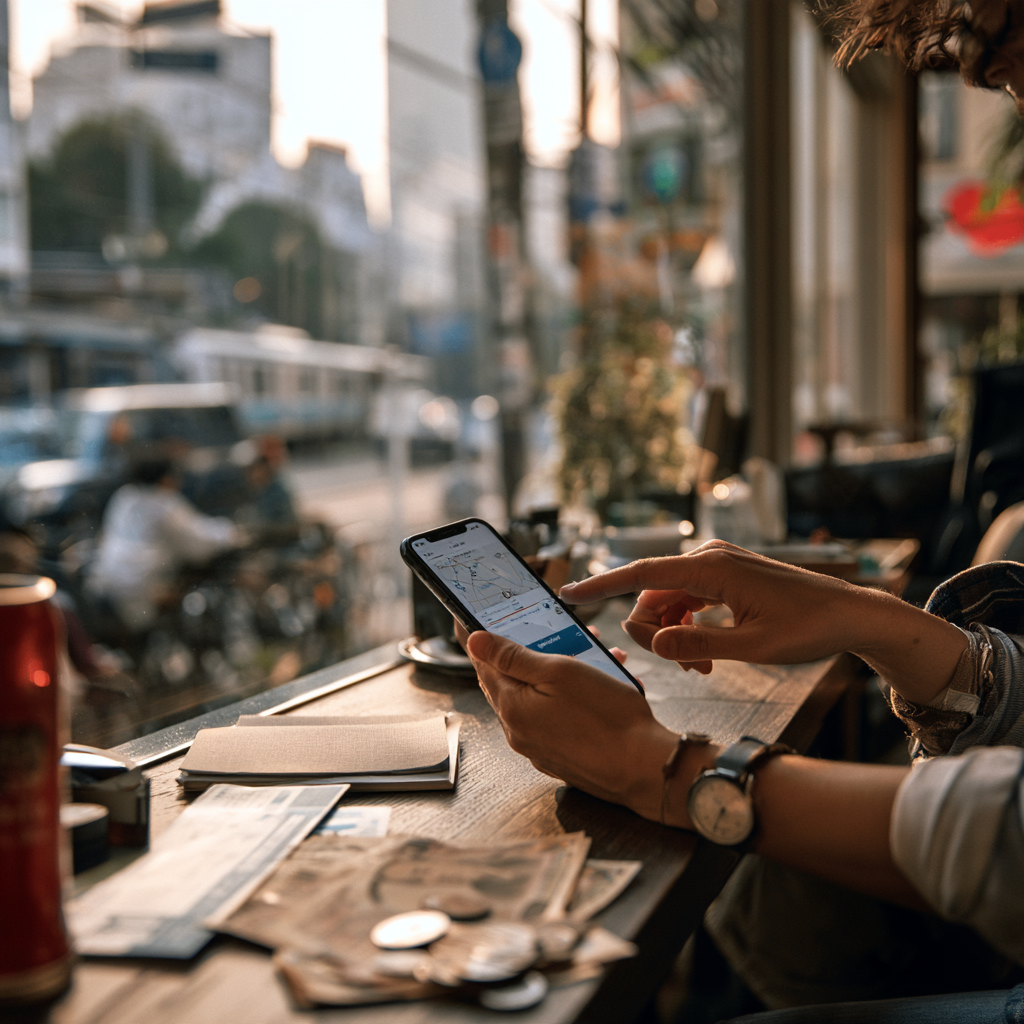
From navigating train stations and checking Google Maps to translating Japanese signs and making restaurant reservations, your smartphone can be one of the most useful tools during your trip.
But what is the best way to stay connected in Japan?
For many international travelers, an eSIM is one of the simplest options. You can purchase a data plan before your trip and connect to a Japanese mobile network without buying a physical SIM card.
In this guide, we’ll explain how eSIMs work, how much they may cost, how they compare with pocket Wi-Fi and physical SIM cards, and what to consider before choosing one.
- Do You Need Internet Access in Japan?
- What Is an eSIM?
- Why Use an eSIM in Japan?
- eSIM vs Pocket Wi-Fi vs Physical SIM Card
- How Much Does a Japan eSIM Cost?
- How to Choose a Japan eSIM
- Popular Ways to Get a Japan eSIM
- How to Install a Japan eSIM
- When Should You Activate Your eSIM?
- Common eSIM Problems in Japan
- Is a Japan eSIM Worth It?
- Conclusion
Do You Need Internet Access in Japan?
You can travel around Japan without mobile data, but having internet access can make your trip much easier.
A smartphone can help you with:
- Google Maps and other navigation apps
- Train and subway information
- Translation apps
- Restaurant searches and reservations
- Hotel information
- Online payments and reservations
- Checking opening hours
- Communicating with travel companions
Japan has an extensive public transportation network, but navigating it can sometimes be confusing, especially for first-time visitors.
Being able to check routes and train schedules on your phone can save you a lot of time.
You can download maps and translation apps in advance, but having a reliable internet connection gives you more flexibility during your trip.
What Is an eSIM?
An eSIM is a digital SIM built into your smartphone.
Unlike a traditional SIM card, you don’t need to physically insert or replace anything.
Instead, you purchase an eSIM plan, install it on your compatible smartphone, and connect to a mobile network using the digital SIM profile.
For travelers, this can be particularly convenient because you can often set everything up before leaving home.
Once you arrive in Japan, you can activate the eSIM and start using mobile data.
Before Buying an eSIM
Make sure your smartphone:
- Supports eSIM
- Is unlocked for use with other carriers
- Supports the network and frequency bands used by the eSIM provider
Many recent smartphones support eSIM, but compatibility depends on the specific model.
Always check your device and the provider’s compatibility information before purchasing a plan.
Why Use an eSIM in Japan?
There are several reasons why travelers choose eSIMs for Japan.
No Physical SIM Card
You don’t need to find a store at the airport or remove your existing SIM card.
If your phone supports dual SIM functionality, your regular SIM can often remain in your phone while the eSIM handles your mobile data.
Easy to Prepare Before Your Trip
You can often purchase an eSIM before leaving home and install it in advance.
This means you don’t have to search for a SIM card immediately after arriving in Japan.
Convenient for Short Trips
If you’re visiting Japan for a few days or a couple of weeks, a prepaid eSIM can be a simple way to get mobile data without signing up for a long-term mobile plan.
Useful for Navigation
Having mobile data from the moment you arrive can be especially helpful when you’re trying to find your way from the airport to your hotel.
eSIM vs Pocket Wi-Fi vs Physical SIM Card
There isn’t one perfect internet option for every traveler.
The best choice depends on your trip, your devices, and whether you’re traveling alone or with other people.
| Option | Main Advantage | Possible Disadvantage |
|---|---|---|
| eSIM | Convenient and no physical device | Requires a compatible phone |
| Pocket Wi-Fi | Can connect multiple devices | You need to carry and charge the device |
| Physical SIM | Works with compatible phones | Requires changing the SIM card |
| Free Wi-Fi | No additional cost | Coverage and reliability can vary |
eSIM
An eSIM can be particularly convenient for travelers who want a simple setup and mainly use one smartphone.
Pocket Wi-Fi
Pocket Wi-Fi can be useful for families, couples, or groups that need to connect several devices.
However, you need to carry the device with you and keep it charged.
Physical SIM Card
A physical SIM is another option if your phone doesn’t support eSIM.
Depending on the service, you may be able to buy one at an airport, electronics store, or other retail location.
Free Wi-Fi
Japan has Wi-Fi hotspots at various airports, hotels, cafés, and public facilities.
However, relying entirely on free Wi-Fi can be inconvenient when you’re moving around the country.
How Much Does a Japan eSIM Cost?
Japan eSIM prices vary depending on the provider, data allowance, and validity period.
Short-term plans may be suitable for travelers staying in Japan for several days, while longer trips may require a plan with more data or a longer validity period.
Instead of choosing an eSIM based only on the cheapest price, consider:
- How many days you will stay in Japan
- How much data you expect to use
- Whether the plan includes high-speed data
- Which Japanese networks are supported
- Whether hotspot or tethering is available
- When the validity period starts
A cheaper plan isn’t necessarily the best option if you run out of data halfway through your trip.
Tip: Check the provider’s current prices shortly before your trip, as eSIM plans and pricing can change.
How to Choose a Japan eSIM
With many eSIM providers available, comparing plans can be confusing.
Here are some of the most important things to check.
1. Data Allowance
Think about how you normally use your phone.
If you mainly use Google Maps, messaging, translation apps, and occasional web browsing, you may not need a huge data allowance.
If you frequently watch videos or upload photos and videos, you’ll probably need more data.
2. Validity Period
Check how long the plan remains active.
For example, a 7-day plan may be enough for a short trip, while a two- or three-week trip will require a longer plan.
3. Network Coverage
Check which Japanese mobile networks the eSIM uses.
Coverage can be particularly important if you plan to travel outside major cities such as Tokyo, Osaka, and Kyoto.
4. Hotspot Support
If you want to connect a laptop or another device through your phone, check whether the eSIM supports hotspot or tethering.
5. Activation Rules
Some eSIM plans start counting their validity period when you install them, while others begin when they connect to a supported network.
Always check the provider’s instructions before installation.
Popular Ways to Get a Japan eSIM
Several eSIM providers offer plans for travelers visiting Japan.
When comparing providers, look at:
- Price
- Data allowance
- Validity period
- Network coverage
- Activation process
- Hotspot support
- Customer support
Rather than choosing a plan based only on price, consider how much data you are likely to use and how long you will stay in Japan.
It’s also worth checking whether the provider has clear installation instructions and customer support in case you experience problems during your trip.
How to Install a Japan eSIM
The exact installation process depends on your smartphone and eSIM provider, but the general process is usually similar.
Step 1: Check Your Phone
Confirm that your smartphone supports eSIM and is unlocked.
Step 2: Purchase Your eSIM
Choose a plan based on your travel dates and expected data usage.
Step 3: Install the eSIM
The provider will usually give you instructions for installing the eSIM.
Depending on the provider and device, you may use a QR code, an app, or manual installation.
Step 4: Keep Your Regular SIM Active if Needed
If your phone supports dual SIM functionality, you can often keep your regular SIM for calls and messages while using the Japanese eSIM for mobile data.
Step 5: Select the eSIM for Mobile Data
Once you arrive in Japan, select the travel eSIM as your mobile data line.
Follow the provider’s instructions carefully because activation procedures can differ between plans.
When Should You Activate Your eSIM?
This is an important point for first-time eSIM users.
You can often install an eSIM before your trip, but installation and activation are not always the same thing.
Some plans begin their validity period when the eSIM connects to a supported network.
Others may have different activation rules.
For this reason, check the specific instructions provided with your eSIM before installing or activating it.
A good approach is to prepare the eSIM before leaving home and make sure you understand exactly when the validity period begins.
That way, you can avoid wasting part of your plan before your trip even starts.
Common eSIM Problems in Japan
Even when an eSIM is installed correctly, travelers may occasionally experience connection problems.
Here are some common issues.
No Internet Connection
Check that:
- The eSIM is turned on
- Mobile data is assigned to the eSIM
- Data roaming is enabled if required by the provider
- You are in an area with network coverage
- Your phone is connected to a supported Japanese network
The eSIM Isn’t Showing Up
Make sure the installation process was completed correctly.
If you used a QR code, check whether the eSIM appears under your phone’s cellular or mobile network settings.
Data Runs Out
If you’re using a lot of video, social media, or photo uploads, your data allowance can disappear faster than expected.
Using Wi-Fi at your hotel can help reduce mobile data usage.
The Connection Is Slow
Network congestion, location, and the specific mobile network being used can all affect your connection speed.
If you’re traveling to rural areas, check the provider’s coverage information before your trip.
Is a Japan eSIM Worth It?
For many international travelers, an eSIM is one of the easiest ways to stay connected in Japan.
It can be especially useful if you:
- Want mobile data as soon as you arrive
- Don’t want to carry a pocket Wi-Fi device
- Don’t want to replace your physical SIM card
- Prefer to arrange everything before your trip
- Mainly use one smartphone
However, an eSIM isn’t automatically the best option for everyone.
If you’re traveling with a group and need to connect several devices, pocket Wi-Fi may make more sense.
If your phone doesn’t support eSIM, a physical SIM card may be the better choice.
The most important thing is to choose an option that matches your travel style and expected data usage.
Conclusion
Having reliable internet access can make traveling around Japan much easier.
You can use your smartphone to navigate train stations, check transportation schedules, translate Japanese, find restaurants, and stay in touch with friends and family.
For many travelers, an eSIM offers a convenient balance between simplicity and flexibility.
Before choosing a plan, compare the price, data allowance, validity period, network coverage, and activation rules.
And if you’re still deciding, don’t feel that you have to choose the first eSIM you find. Take a few minutes to compare your options and choose the one that best fits your trip.
With a little preparation, staying connected in Japan can be simple—and you can spend more time enjoying your trip.

コメント